
What is El Niño?
El Niño is a natural climate pattern caused by warmer Pacific Ocean temperatures and weaker trade winds.
Why does it matter for farmers?
El Niño can have a major impact on farming conditions, particularly across eastern regions of New Zealand such as Canterbury, Marlborough, Hawke's Bay, Gisborne, Wairarapa and parts of Otago. Typical impacts include:
- Less rainfall and drier soils
- Increased risk of drought
- Reduced water availability
- Slower pasture and crop growth
- Lower yields and reduced farm profitability
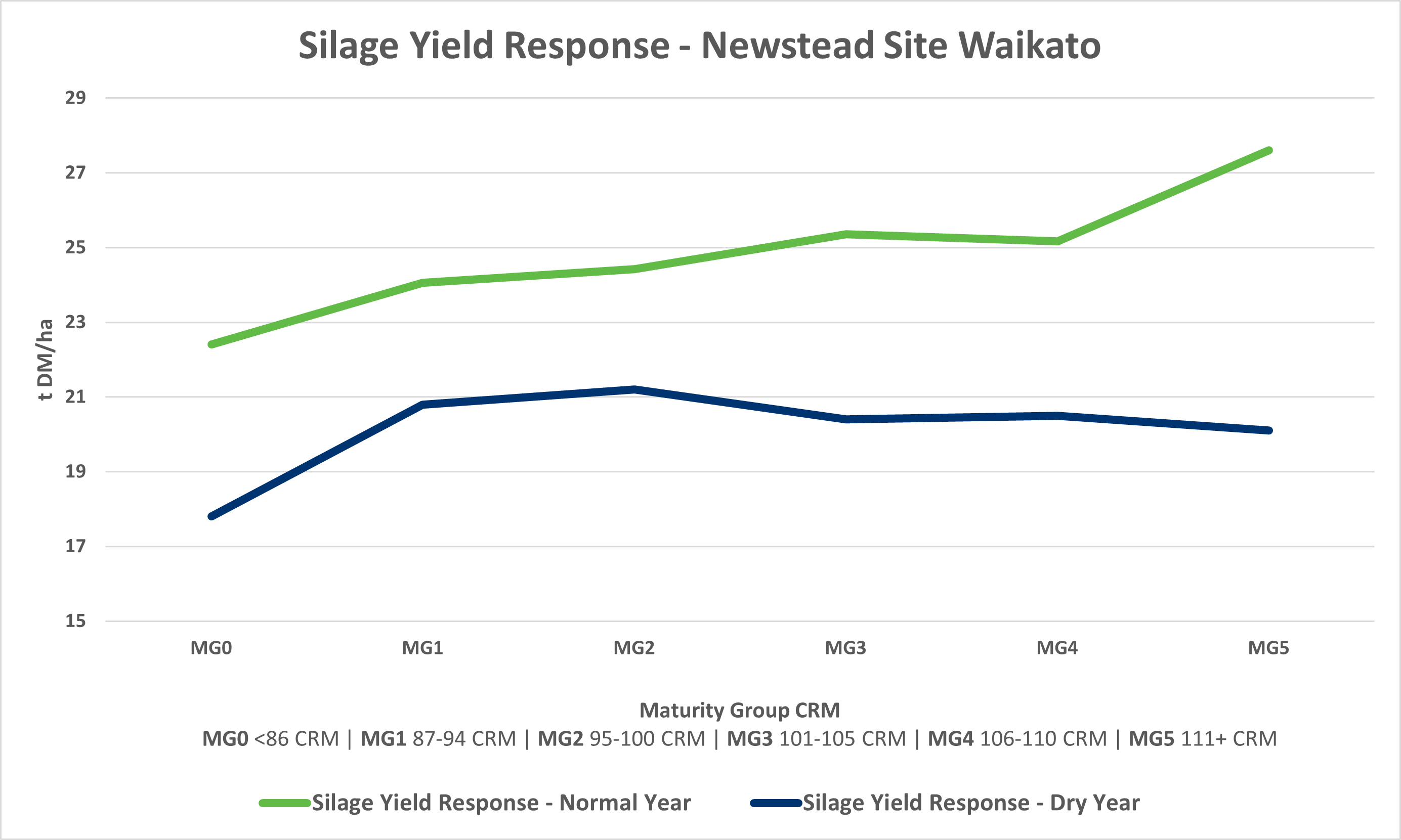
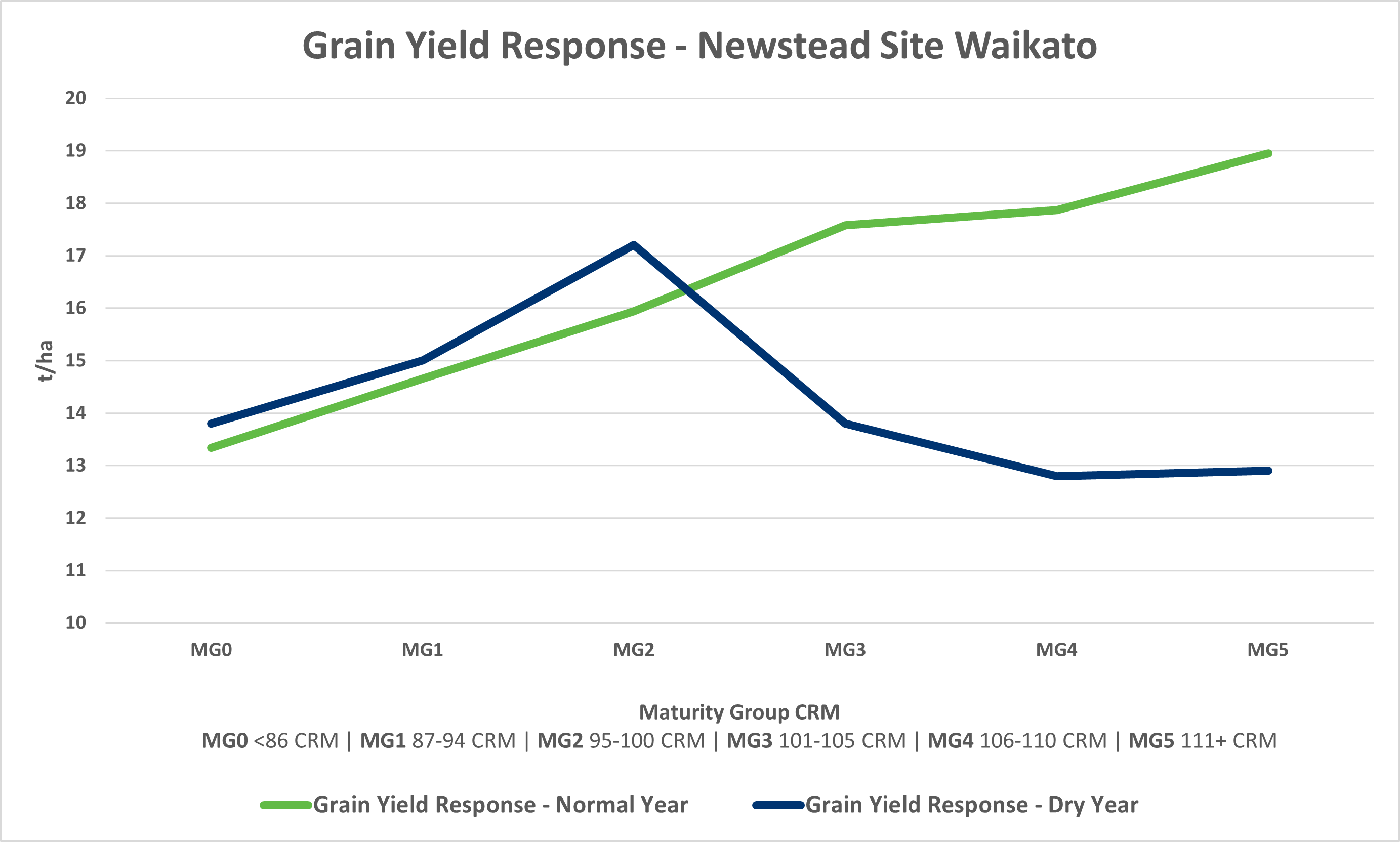
For maize growers, El Niño matters because maize is most exposed when moisture stress hits around ear size determination, flowering, and grain fill. Stressed maize is more susceptible to other agronomic pressures including disease and lodging.
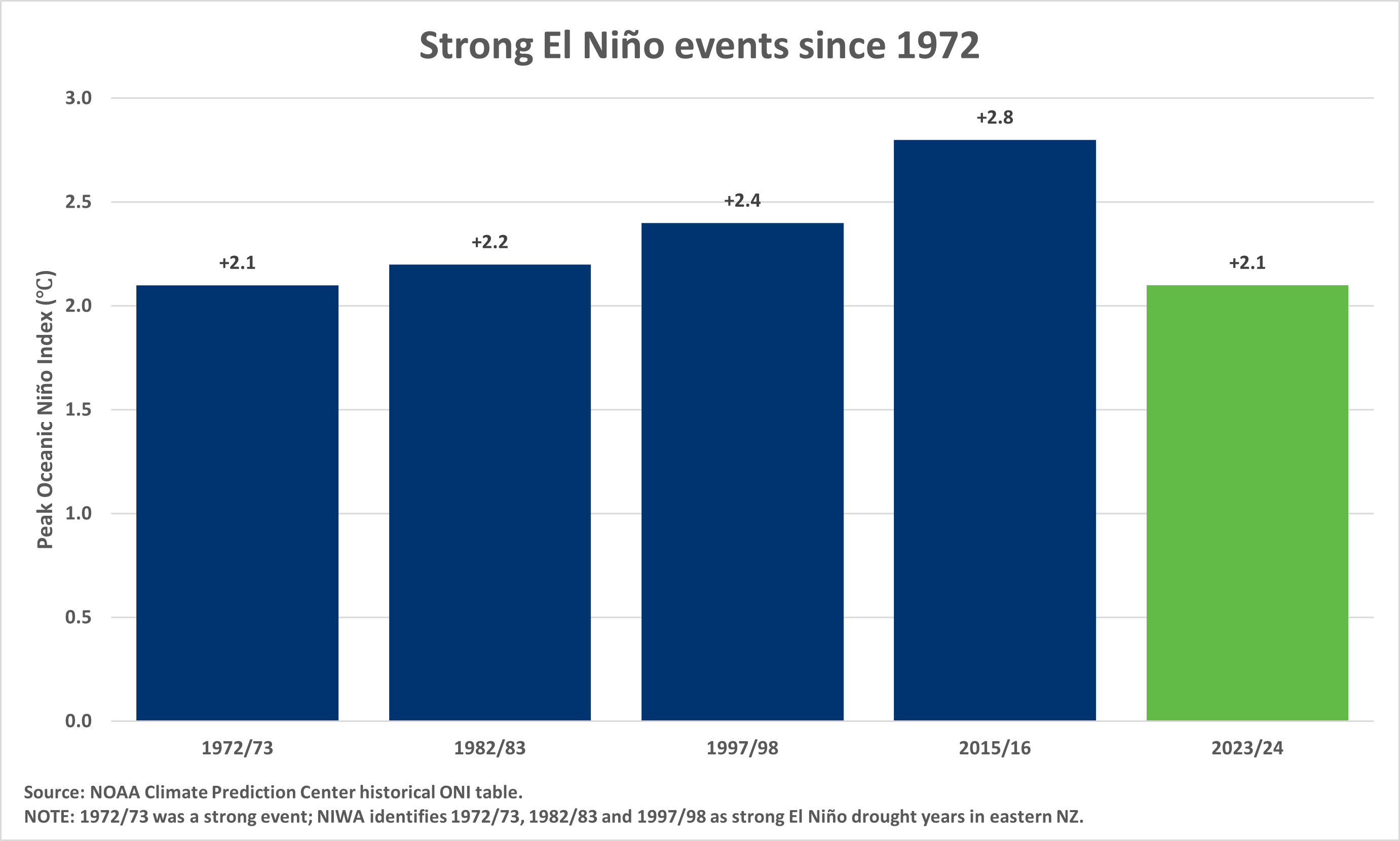
The most recent significant El Niño event occurred in 2023–24
Note
- The 1972/73 El Niño reached the same peak strength as the 2023/24 event and was associated with severe drought in eastern New Zealand. It was one of the benchmark strong El Niño drought years referenced by NIWA for eastern New Zealand.
- Although a high ONI occurred in 2015/16 there were less weather impacts than expected.
When is El Niño expected to arrive?
Current forecasts suggest El Niño is likely to develop during winter 2026, strengthen through spring and summer 2026–27, and potentially continue into autumn 2027.
Impacts for Maize Systems
What it means in the paddock:
- Stronger westerlies and a drier east can accelerate the loss of soil moisture.
- Once moisture becomes limiting, plant-to-plant competition increases quickly at higher populations.
- The cost of getting population wrong rises in a dry year because you pay for the seed and still expose the crop to more stress.
The wrong strategy in an El Niño year:
- Pushing population purely for top-end yield.
- Using products that need everything to go right.
- Ignoring paddock-to-paddock differences in soil water holding capacity.
- Treating a dry-risk season like a “normal” season.
A Better Approach: Plant for Resilience
A Better Approach: Plant for Resilience
Choose Flex Hybrids
Flex hybrids e.g. PAC 144, 314 and 430 can compensate for lower stand density by increasing ear size and yield per plant. Benefits:
- Better adaptability when moisture is limited
- Improved performance across varying environments
- Greater yield stability under drought stress
Reduce Plant Population to Suit Conditions
Plant populations should reflect soil type, water-holding capacity, stored soil moisture, seasonal outlook and seed investment. Benefits:
- Reduces competition for water
- Lowers seed-cost exposure
- Improves crop resilience during dry periods
Match Hybrids to Seasonal Reality
Avoid relying on a perfect late-season finish. Instead, favour hybrids and management practices that remain productive when moisture becomes limiting. Benefits:
- Greater tolerance of seasonal variability
- Reduced downside risk
- More reliable crop performance

The Bottom Line
The Bottom Line
For many New Zealand farmers El Niño raises the risk of drought, feed shortages, water restrictions, and reduced production. Early planning around feed reserves, stocking rates, irrigation, and finances can help reduce the impact of a strong El Niño season.
For maize growers, the focus should be on hybrid choice, planting rates and appropriate management. The aim is to protect yield stability and margin by matching hybrid type and population to the reality of a dry-risk season.
|
Problem in an El Niño season |
Better response |
Benefit |
|
Dry summer outlook |
Use a lower, field-appropriate plant population |
Reduces competition for water and lowers seed-cost risk |
|
Variable soils or lighter ground |
Prefer more adaptable flex-type hybrids |
Enables each plant to do more when a stand is lighter |
|
Concern about a dry finish |
Use products/management that are less dependent on a perfect finish |
Improves crop resilience and yield stability |
|
Need to protect margin, not just chase yield |
Match hybrid and population to risk level paddock by paddock |
Improves decision quality and reduces downside exposure |